Switch Mode
👀 Enjoying WebNovelDB? Bookmark us and leave a quick review and comment — it really helps our community grow 💫
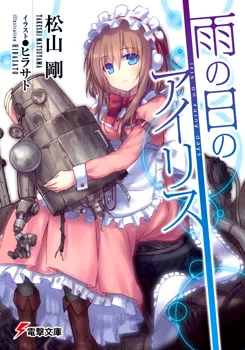
Ame no Hi no Iris
Completed

Ame no Hi no Iris

Flower Series, Iris Di Kala Hujan, Iris on Rainy Days, 花シリーズ, 雨の日のアイリス
Native Language Japanese
Released 2011
Artist
Original Ch.: 45
Translated Ch.: 45
Rank: #843
Last Update: April 10, 2026
Original Pub.: ASCII Media Works
View: ? Views
9.4

Ame no Hi no Iris is a popular novel that blends Drama, Psychological, Romance and more. Written by the author Matsuyama Takeshi. A total of 45 chapters have been translated and the novel is complete.

Synopsis

The story is centred around a cute android who initially had a happy life with her master who dearly loved her. But she was then struck by a series of misfortunes and ended up in a robot-equivalent of concentration camp. Through experiencing and witnessing the sufferings towards herself as well as the people/robots around her, she eventually gained a better appreciation of life.

🎭 System Interface: The “Melancholy” Protocol

Rather than following a standard [sci-fi] formula, this story operates on a Tragedy-to-Transcendence engine that shapes every major decision and conflict.

Component Classification Tactical Implication
Narrative Engine Psychological Drama / Sci-Fi Drives the story toward a gut-wrenching emotional peak.
Primary Genre Tragedy / Seinen / Drama Sets expectations for a cute robot story, but subverts them with gritty realism.
Atmosphere Gloomy & Poignant Creates a constant feeling of “Vast Melancholy” and impending loss.
The “X” Factor The Robot’s POV Forces the story to evolve by questioning the very definition of a “Soul.”

📂 System Interface: The Status Window (Iris & The Professor)

Instead of simple character roles, the story builds a contrast between these two figures:

Attribute Iris Professor Wendel
Classification The Created The Creator
Mental Body Represents Pure Innocence Represents Protective Responsibility
Personality Diligent, sweet, and eventually world-weary. Brilliant, eccentric, and deeply compassionate.
Dynamic Their relationship evolves through a shift from “Master-Servant” to a “Father-Daughter” bond that drives the entire tragedy.
Bookmark

Editor's Note

💡 The "Iron Tears" Insight

[The Emotional Rollercoaster]: What makes this aspect interesting is not just the sadness, but how the author uses the "logic" of an android to make the cruelty of the world feel even more stark and unfair.

[The Tone Shift]: While many readers enjoy the intense drama, others find it frustrating due to the extreme "grimness" of the middle section, which can feel like "suffering porn" to the unprepared.

[The Universality]: Personally, this is where the novel becomes addictive; it transcends the "Otome/Anime" tropes to become a universal story about what it means to be alive, making it a safe recommendation for even non-anime fans.

Experience Curve

The Memory Circuit Log

Ch. 1–8 (The Countdown to Dismantling): ⭐⭐⭐⭐⭐
A high-tension opening told in reverse. Establishing the "Paradise" while knowing the "Dismantling" is coming creates an immediate sense of dread.

Ch. 9–19 (The Rebirth of Pain): ⭐⭐⭐⭐
The transition into a labor camp. This phase explores the "Rebirth" of Iris in a world where she is no longer loved, focusing on the grit and survival of machines.

Ch. 20–37 (The Battery Countdown): ⭐⭐⭐⭐⭐
The "Execution" arc. Using battery percentages as chapter titles creates a visceral, ticking-clock sensation that leads to the novel's emotional peak.

Ch. 38–45 (The Final Legacy): ⭐⭐⭐⭐⭐
The "Letters" and afterword. This provides the closure and deeper philosophical context that elevates the story from a tragedy to a masterpiece.

WebNovelDB Review

9 /10
A hauntingly beautiful masterpiece that defines the "Bittersweet" genre for the light novel medium.

Polish: 10/10. The writing feels incredibly detailed and structured, particularly in how it handles the technical and emotional aspects of being a machine.

Pacing: 7/10. The story starts slow with domestic slice-of-life, but gradually shifts into a high-stakes survival drama, which may appeal more to readers who value emotional payoff over action.

Character Depth: 10/10. Rather than focusing on power-ups, the characters are defined by their capacity for love and their reaction to hopelessness.

Originality: 9/10. While it shares similarities with Plastic Memories or Chobits, it distinguishes itself through its much darker, "concentration camp" narrative arc.

The Good:
One of the strongest aspects is the closure, especially in how it delivers a final message that is both heart-wrenching and strangely life-affirming.

The Bad:
However, it struggles with extreme emotional weight, which can make certain parts feel physically exhausting to read if you aren't in the right headspace.

The Archetype:
The Broken Jewel — a protagonist who doesn’t follow the usual heroic path, but instead operates as a beacon of hope that remains intact even when her physical body is shattered.

Verdict:
Ame no Hi no Iris is ultimately a "Crying in the Dark" experience. It’s less about futuristic technology and more about watching a character navigate a world that refuses to see her humanity. If you’re looking for a short, impactful story that will make you rethink the value of your own life, this is a must-read.
WebNovelDB Team

Key Information

Main Characters: Iris (High-Spec Housemaid Android) — rather than a typical protagonist, she is an innocent, purely logical being whose understanding of "happiness" is systematically deconstructed and rebuilt through trauma. Alongside Professor Wendel (Creator/Father Figure), whose relationship dynamic is defined by genuine familial love that transcends biology, and Lilith, a fellow android who often acts as a mirror to Iris’s suffering in the mechanical labor camps.
Power System: The Circuit of Sentience. Instead of a generic leveling system, this mechanic revolves around the "User-Android" bond and the physical integrity of a robot's hardware, forcing the protagonist to navigate a world where her "soul" is considered property and her memories are her only true currency.
Themes: Beyond The Ethics of AI and Existentialism, the story heavily explores the Resilience of the Human (or Artificial) Spirit — especially through how the protagonist reacts to extreme dehumanization and the loss of her protected "Eden."

Reading Progress

Not Started Chapters: 0 Rating: -

Community Reviews

Have you read this novel? Share your thoughts with the community!

Consider sharing:
• What moment surprised you the most?
• How would you rate the character development?
• Would you recommend this to other readers?

Comment

0 0 votes
Novel Rating
Subscribe
Notify of
guest
0 Comments
Oldest
Newest Most Voted

Options

not work with dark mode
Reset
0
Would love your thoughts, please comment.x
()
x